
Day 6, September 30, Mt. Fuji and Hakone, Atami

We woke early again this morning. I slept most of the night; Patrise woke up too soon and not had sufficient sleep. Last night before going to bed, we did have a masseuse come to the room. Patrise had an 1.5-hour massage, I had a 1-hour massage. So, we went to bed fairly relaxed. She however had an upset stomach, from the sushi and sashimi we ate at lunch, although it did not bother me at all. Perhaps that is why she did not sleep well or long. At any rate, today we were on the move all day, and she clearly lacked the energy for the day’s activities.
We finished our packing, because we had to deliver our large suitcases to the hotel lobby no later than 8am. We actually delivered ours by 7:30am, so we could leisurely eat breakfast before having to board the bus by 9am. After depositing the large luggage, we paid our bill – the massages and two instances of room service had to be paid for – then went to the breakfast buffet for the final time.
We returned to our room to get our carry-on luggage (1 piece), my backpack and a few sundry items. We sat in the room reading, for about forty-five minutes, before leaving the room for the last time and boarding our bus. Today we had a new tour guide for our group, Group A. Our original guide, Masa, performed so poorly that many people in the group complained to our GCBA trip coordinator, Shyril Beck, who has served as the Executive Director for the Gate City Bar Association for many years. Shyril notified the company, All Japan Tours and they replaced Masa with Joyce. The difference was immediately noticeable and a HUGE improvement in the quality of our experience
From the very beginning, Joyce offered a much richer, more detailed, and a much better organized experience. She explained our destinations for the day, and then immediately set about teaching us more about Japanese language, culture, demography, geography, and history. Here are some of the several things she spoke to us about or taught us:
Ø The difference between informal and formal use of language. For example, you might say “ohayo” (good morning) to a friend, coworker, or any other familiar acquaintance. However, to a stranger or an older person or a superior, you would use the formal greeting of “ohayo gozaimasu.”
Ø The difference between ohayo (good morning) and “kon’nichiwa” (“hello” or “good day”). And when to say konbanwa (‘good evening”).
Ø That Japanese is a language that consists of three different types of characters and words: (1) kanji – the exact characters and word borrowed from Chinese, but pronounced so differently, that a Chinese speaker would not understand it; (2) hiragana – the original Japanese characters and words; and (3) katakana – words that are borrowed from other languages (other than Chinese) and varied to fit the rules of Japanese language. Her example of katakana was the Japanese word for McDonald’s, which is Makudonardo, because all Japanese words must end in a vowel (a, e, i, o, or u).
Ø The major islands of Japan, beginning at the farthest north, are Hokkaido, Honshu, Shikoku, and Kyushu. She personally includes Okinawa, which is much further to the south of the main four (over 500 miles from Kyushu, and almost 1,000 miles from Tokyo;)
Ø Tokyo City, excluding suburbs, is a population of 12 million, ten percent of Japan’s total population of 122 million;
Ø Tokyo became the nation’s capital, when the Meiji Emperor in 1868, moved the capital from Kyoto to Edo. Edo was already the most politically and economically dominant city in Japan. When the capital was moved to the east, the name changed from “Edo” to “Tokyo.” “To-kyo” literally means “eastern capital”;
Ø How buildings are constructed to minimize earthquake damage;
Ø The national earthquake emergency notification system;
Ø The money system of bills and coins, and
Ø Much more.
One of the more fascinating cultural stories she told was in answer to the question of why there are no (or at least very few) public trash cans. It stems from the 1995 sarin nerve gas terrorist attack in Tokyo. The gas was placed in trash cans. The attack killed 13 or 14 people (depending on source) and injured almost 6, 000. As a result, Japan minimizes the use of public trash cans, especially in train stations.
(Let me cut to the chase, as I am getting too longwinded here.)
It took us about three hours to get from Tokyo to the Fifth Station of Mt. Fuji. Having left central city, we saw first the suburbs, then the rural countryside, the natural forested areas. Joyce explained the distribution of land use in Japan as of this year.

Various scenes of Japanese countryside, from Tokyo to Mt. Fuji region
The bus ride up the mountain was mostly shrouded in a dense, drizzly fog. At one point, the driver could not see more than 10 meters (35 feet) in front of the bus. As we were headed up to the Fifth Station, we encountered or heard about one fascinating and one disturbing aspect of Mt. Fuji. Fascinating: there is a portion of the road which actually “sings” a tune, based on the tire treads of the vehicles that ride over it. It is a very distinctive and quite melodic sound. That portion of the road up the mountain is actually called “The Melody Road.” Disturbing: there is a forest in a part of the mountain park known as “The Suicide Forest.” This is not legend, but real fact. For many years, as many as two hundred or more people will come there to die by their own hand. They do not throw themselves off a cliff, but rather they hang themselves from the trees. Each year, the National Park Service hires a crew of people to go into the forest and collect the bodies, so that they may be properly disposed of. The government used to announce how many committed suicide in the forest each year, but it then decided that perhaps by making public announcements about the body counts, it was inducing more people to follow suit. So now, the government no longer provides a public announcement of the body count of suicides. Still, there are many of them.
When we arrived at our destination, we wandered around the area, seeing the shrine, going to the summit viewing area – Patrise got a decent glimpse momentarily of Mt. Fuji's summit, but most people did not see it due to the dense fog and cloud cover – visiting the restrooms, the restaurant, and/or the souvenir shop. The Mt. Fuji National Park is actually controlled by two different prefectures. (There are 47 prefectures in Japan, similar to the way the United States is formed from 50 separate states.) The two prefectures governing the park have to agree on any policy or actions that alter, enhance, or affect the park. There is currently a debate between them about whether to put a rail system into the park, in order to reduce the number of cars and their associated pollution. One prefecture says “yes”, the other says “no.” The “no” side is reluctant, due to the number of trees that would have to be destroyed in order to establish the rail line and other detrimental environmental effects. So, to date, a continuing stalemate on the concept of a rail link into Mt. Fuji Park.
We returned to the bus and headed 1.5 hours to Hakone. Hakone is the site of many warm springs, due to near surface level geothermal activity. There are a lot of hot springs, small geysers and steam vents in the area. A lot of visitors come to bathe in the hot springs. Hakone itself is but a small town of about 10,000 residents. However, it gets 20 million visitors year-round! And so it has a lot of hotels.
When they come, many sample the “black eggs” that can only be made and procured from Hakone. We went to Hakone to ride the Hakone “ropeway”, a gondola that traversed the valley, to see the steam vents and sulphur formations, and to get the black eggs. The eggs are made black by cooking them in the hot spring water at high temperatures; and in the water of the sulphur springs, the color of the eggs becomes black on the outside. Japanese people believe that eating one black egg extends your life by seven years. If you eat two black eggs, your life will be extended up to fourteen (14) years. However, if you eat three black eggs, you will lose years off of your life.
After a fifty (50) minute stop, we loaded the bus to continue our journey to Atami. The road to Atami was dark, rainy, foggy and a very steep drop with warnings of 10% and 13% declines in several stretches of the journey. It is so perilous that they have runaway truck or bus ramps in several places. It was a bit unnerving to watch.
When we arrived at our ryokan – a traditional Japanese inn with low-lying beds – and we got our room keys from Joyce; in the lobby, we selected yukatas in our sizes and went to our rooms. FYI, yukata is to kimono, as casual is to formal attire. We had an hour to wait before needing to be at the restaurant on the first floor of the hotel, dressed in our yukatas and slippers, to partake of our kaiseki, traditional Japanese haute cuisine. It was a good meal and with sixty of us, we took up the entire dining hall. It was the first occasion in which all of us were together in one spot at the same time.
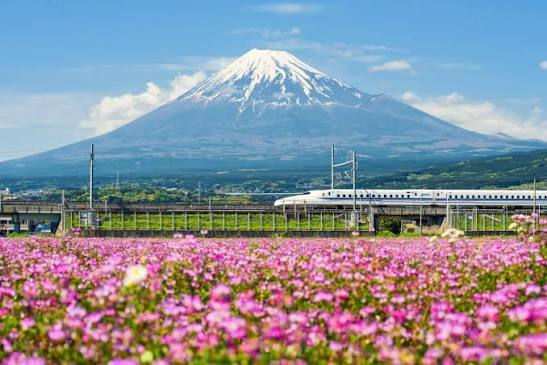
After dinner, Patrise and I headed back to our room. She immediately fell asleep, while I worked on today’s blog entry. Normally, I have her edit it for typos, missing words, and bad writing, before I publish. That will not be the case tonight, as I need to get to bed myself. Tomorrow, we will catch the Shinkansen (the Japanese bullet train) for a two-hour ride to Kyoto!
A great deal of Japanese tradition, language, culture, and learning today. It has been a great day!


Comments